
The Work I Thought I Was Meant to Do
I’m starting to realize something I didn’t expect: maybe it’s not that things aren’t working—maybe I’ve been trying to fit into a model that was never really mine to begin with.

I’m starting to realize something I didn’t expect.
I don’t think I’m meant to do this the way I thought I would.
When I first stepped into Ayurveda, it felt pretty clear what that path looked like—build a practice, take clients, offer consultations, create programs. That’s what made sense, and honestly, that’s what I assumed I was working toward.
It was a logical next step after years of building something successful, structured, and outwardly “complete.” I thought I was simply shifting industries, not rethinking the way I relate to work altogether.
But over time, something started to feel off. Not wrong exactly, just… incomplete.
There have been moments where I’ve sat in front of my work and thought, I don’t want to package this. I don’t want to sell it like this. I don’t even know if this is the role I’m meant to play.
For a while, I took that as a sign that things weren’t working. Like maybe I just wasn’t gaining traction, or I hadn’t figured out the right way to position it yet.
But I’m starting to see it differently now.
Maybe it’s not that it isn’t working. Maybe it’s that I’m trying to fit into a model that was never really mine to begin with.
Because the moments that feel the most natural aren’t when I’m “offering a service.” It’s when I’m writing, observing, and making sense of what I’m seeing—in people, in leadership, in how we live and operate day to day.
That’s the part that doesn’t feel forced.
And I’m beginning to trust that more.
Not as a strategy. Not as a pivot. Just as a willingness to follow what feels true, even if it doesn’t yet have a clear outcome attached to it.
We spend so much time trying to make things make sense—to ourselves, to others, to the structures we’ve learned to operate within.
But sometimes the shift doesn’t come from figuring it out.
It comes from being honest about what no longer fits.
And letting that be enough, at least for now.
This feels like the beginning of a different kind of work. I’m curious to see where it leads.
Staying Human in a Hurting World: Walking the Tightrope Between Awareness and Peace
In a world where suffering arrives instantly through our screens, many of us find ourselves walking a tightrope between awareness and inner peace. How do we stay human in the face of everything we witness?
“You are the world and the world is you.”
My beloved teacher and mentor often says these words, and it is a philosophy I try to live by and better understand each day. But I would be dishonest if I said that understanding has been easy lately.
These are troubling times. The suffering of the world feels closer than it ever has before. War, violence, injustice, and political instability now arrive instantly through the small glowing screens we carry everywhere with us. News from across the planet appears in the same place where we check the weather or look at photos of our children. The boundary between our personal lives and the suffering of the world has grown increasingly thin.
Because of this, I often find myself vacillating between two states. There are days when I lean toward awareness, reading the headlines and allowing myself to feel the weight of what is happening in the world. It feels important not to look away or pretend these realities do not exist simply because they are not unfolding in my immediate environment.
And then there are other days when I shut it all out.
Not because I don’t care—but because I do. Sometimes the nervous system simply cannot metabolize the constant stream of human suffering without becoming overwhelmed.
When I step away, another feeling inevitably arises: guilt. A quiet awareness that the ability to turn the news off is itself a privilege. There are people in this world who cannot look away because they are living inside the very stories that I am choosing not to read that day. Entire communities exist in conditions where violence, instability, or displacement are not headlines but daily life.
I am aware that my distance from those realities allows me the option of choosing when to engage and when to step back. That awareness does not disappear simply because I close the news app. It lingers in the background, reminding me that my peace is not available to everyone in the same way.
And so the tension remains.
At times it feels as though I am walking a tightrope between awareness and preservation of inner steadiness. On one side is the desire to stay informed and engaged with the realities of the world. On the other is the recognition that constantly absorbing global suffering can erode the very inner stability required to respond with clarity and compassion.
For those of us trying to live consciously, this tension can feel almost paradoxical. We seek to cultivate mindfulness, stillness, and presence in our own lives while simultaneously holding awareness of immense suffering across the world. At times the two seem almost incompatible. How do we sit quietly in meditation while knowing that violence is unfolding somewhere else on the planet? How do we cultivate joy with our families while other families are navigating unimaginable loss?
These questions do not have easy answers. But both ancient wisdom traditions and modern neuroscience offer insights that help illuminate this dilemma.
Human nervous systems were not designed to process the suffering of an entire planet in real time. For most of human history, our stress responses were activated by threats within our immediate environment—something happening within sight, within reach, within our community. Today, however, we are exposed to tragedies unfolding across continents within seconds of their occurrence. Our bodies often react to these stories as if the threat were directly in front of us.
The result is a chronic state of activation that many people now live with daily.
Modern neuroscience refers to this as allostatic load—the cumulative burden placed on the nervous system when it continually responds to stress without adequate recovery. When this load becomes too great, the nervous system begins to oscillate between anxiety, anger, helplessness, and emotional numbness.
Ayurveda recognized a similar phenomenon long before the language of neuroscience existed. In Ayurvedic philosophy, the mind is constantly digesting impressions from the world, just as the body digests food. These impressions—what we see, hear, read, and experience—are a form of nourishment for the mind.
But nourishment can become toxic when the system cannot digest it.
When the volume of impressions becomes too great, the mind accumulates ama, a form of undigested residue that clouds perception and disrupts inner balance. Confusion increases, reactivity rises, and emotional exhaustion sets in. From this perspective, the endless stream of global news, social media commentary, and images of suffering becomes a kind of mental overconsumption. The mind takes in more impressions than it can reasonably process.
The solution is not complete disengagement from the world, but neither is it constant exposure.
The solution is digestion.
Practices that help regulate the nervous system—meditation, breathwork, time in nature, contemplative reflection, prayer, and meaningful connection—create the internal conditions that allow difficult experiences to be metabolized rather than simply accumulated.
Without these forms of regulation, people tend to fall into one of two patterns. Some remain constantly immersed in distressing information, leaving the nervous system in a persistent state of agitation. Others shut down entirely, avoiding engagement with the world because it feels too overwhelming to face.
Neither state supports clarity or compassionate action.
A regulated nervous system, however, makes something different possible. It allows us to remain aware of suffering without becoming consumed by it. We can witness painful realities while maintaining the steadiness necessary to respond thoughtfully rather than react impulsively.
For a long time I wrestled with the idea that cultivating inner peace might somehow be selfish in the face of global suffering. Increasingly, though, I have come to see it differently. Inner regulation is not escape from the world—it is preparation for meeting it.
When the nervous system is constantly flooded, our responses tend to be driven by fear, anger, or helplessness. When it is steadier, we retain access to empathy, discernment, and thoughtful action. We remain capable of responding to the world rather than simply reacting to it.
This understanding has softened some of the guilt I feel when I step back from the constant stream of information. The goal is not ignorance but sustainability. Awareness must be balanced with restoration.
And yet the awareness of privilege remains important. The fact that I can choose when to engage and when to step away is not something I take lightly. It reminds me that my responsibility is not to drown in the suffering of the world, but to remain human enough to respond to it with clarity and care.
Perhaps this is part of what it means to live consciously.
Conscious leadership is often framed in terms of careers, influence, or public authority. But leadership is not confined to professional roles. It appears in quieter places: in the way parents guide their children, in the patience of caregivers tending to loved ones, and in the presence we bring into our homes and communities.
Every person participates in shaping the emotional climate of the world around them. The steadier we become, the more steadiness we bring into the spaces we inhabit. The more compassion we cultivate within ourselves, the more compassion becomes possible between us.
If my teacher is right—if the world is indeed a reflection of us—then tending to our inner landscape may be one of the most meaningful contributions we can make.
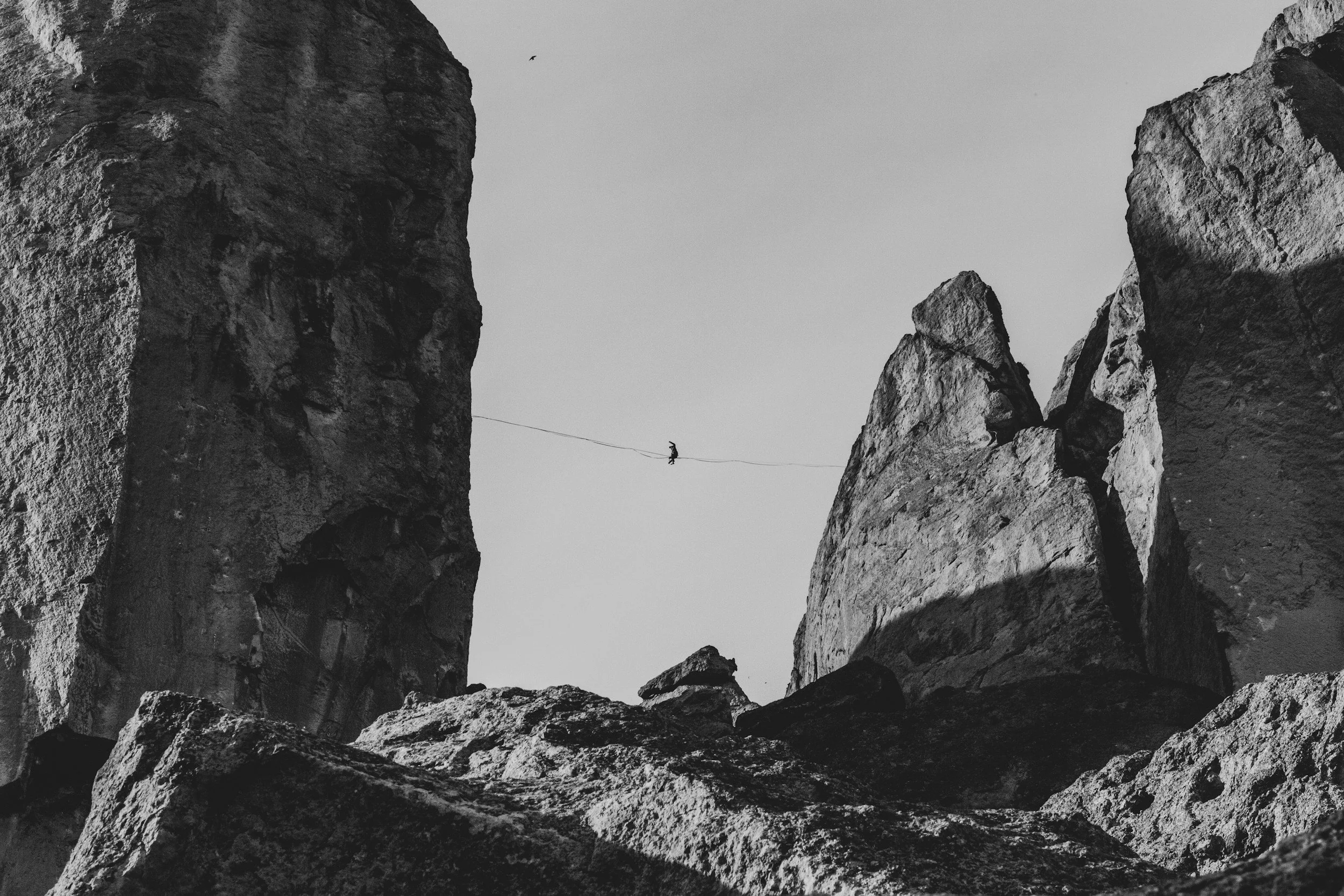
Still, I won’t pretend that the balance is easy. Some days it feels like walking a tightrope stretched across a desert, learning when to look directly at the suffering of the world and when to step back long enough to remember what peace feels like.
Perhaps tending to our own humanity is one small way we help the world remember its own.
Author’s Note:
As an Ayurvedic practitioner, I often explore the intersection between nervous system health, contemplative traditions, and the ways we navigate an increasingly complex world. This reflection grew from my own attempt to understand how we remain compassionate and present without becoming overwhelmed by the suffering we witness around us.

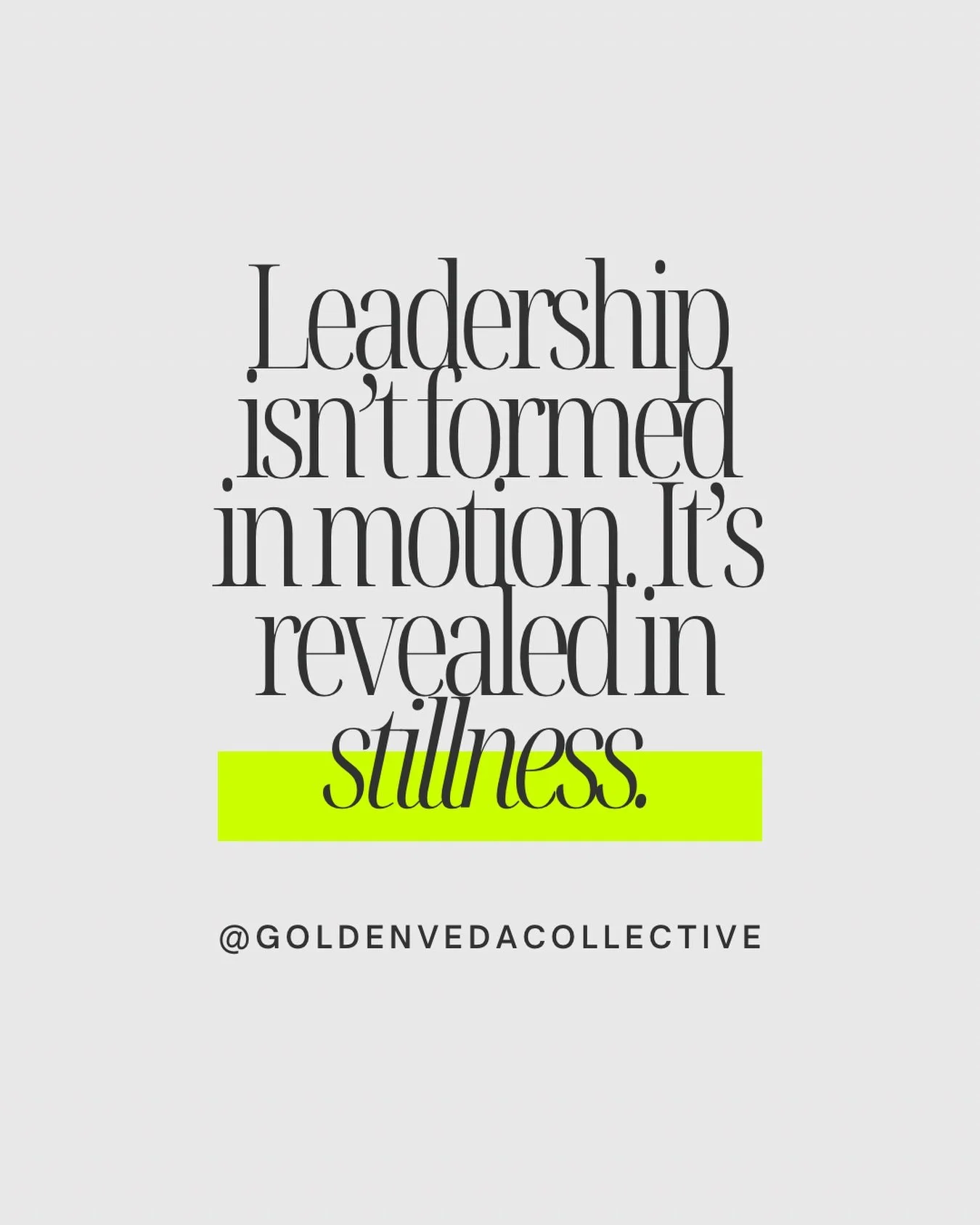
Leadership Isn’t Formed in Motion — It’s Revealed in Stillness
Leadership is often forged in motion — speed, effort, constant decision-making. But some of the most important leadership work happens when movement stops. This essay explores why stillness, uncertainty, and unchosen pauses are not signs of stagnation, but thresholds where deeper clarity, purpose, and coherence are revealed.

Leadership is often described as something forged through movement — momentum, discipline, constant decision-making. We praise speed, resilience, and the ability to keep going. But in my experience, leadership is not formed in motion. It is revealed in stillness, when the noise falls away and there is nothing left to outrun.
Stillness is uncomfortable precisely because it removes the structures we use to define ourselves. Effort gives us roles. Urgency gives us identity. Busyness offers the illusion of progress. When movement stops, what remains is not weakness, but truth — the parts of our leadership that no longer require performance to exist.
I came to understand this not through theory, but through absence. When a fourteen-year body of work came to an end, the momentum I had relied on disappeared with it. What followed was an unchosen quiet — a stretch of time that demanded listening instead of doing, and revealed aspects of leadership that could only emerge when effort was no longer available.
What stillness exposes most sharply is not a lack of direction, but a collapse of purpose as we once understood it. When motion ends, the question that surfaces isn’t What should I do next? but Who am I now, without the roles that once defined me? This is where many people mistake stillness for stagnation, because purpose no longer feels obvious or externally validated.
We are taught to believe that purpose is something we can articulate, refine, and follow — a clearly defined “why” that guides every decision forward. Entire libraries are dedicated to helping us uncover it. And yet, when stillness arrives — through endings, loss, or unchosen pauses — those frameworks often fail us. They assume a stable identity and a clear starting point. They do not account for the disorientation that comes when the old purpose dissolves before a new one has taken shape.
In these moments, feeling lost is not a sign that stillness isn’t working. It is the work. Purpose does not announce itself in the quiet the way it does in motion. It does not arrive as a mission statement or a declaration. It begins instead as a subtle reorientation — a pulling away from what no longer fits, long before clarity about what comes next is available.
Stillness asks us to stay present without answers — and for the conscious leader, this may be the most uncomfortable invitation of all. Leadership often rewards certainty: decisiveness, reassurance, the ability to guide others forward with confidence. But in moments of true stillness, certainty is not available. What is required instead is the capacity to remain grounded while the answer has not yet arrived.
For many leaders, the reflex in these moments is to reach for resolution — to fill the silence with strategy, action, or explanation. Yet when we resist the urge to prematurely decide, something unexpected happens. The absence of an immediate answer creates space. New possibilities emerge. Perspectives that were invisible under pressure begin to surface. Not having the answer does not weaken leadership; it deepens it. It shifts authority from control to presence.
In Ayurveda, there is a term for the kind of misstep that occurs when intellect moves faster than wisdom. Pragya aparādha describes the tendency to act before clarity has fully integrated — to make decisions not because they are right, but because uncertainty feels intolerable. In leadership, this often looks like movement without alignment: action taken to relieve discomfort rather than honor discernment.
Stillness, then, is not the absence of leadership — it is a refinement of it. When we allow ourselves to remain in the quiet without rushing toward purpose or certainty, we begin to hear what effort has been drowning out. Purpose does not arrive fully formed in these moments. It emerges slowly, as discernment. As subtraction. As a deepening awareness of what no longer belongs.
This is where many people become afraid they are stuck, when in fact they are being asked to listen differently. Stillness can feel barren because it removes the familiar markers of progress. But it is often in these empty spaces that leadership reorients itself — not around identity or output, but around integrity. Around coherence. Around the quiet confidence of not needing to know yet.
I have learned to trust these pauses — not because they are comfortable, but because they are honest. Again and again, stillness has revealed what motion never could: the difference between action that sustains us and action that simply keeps us busy. The difference between purpose that is inherited and purpose that is lived.
Some decisions do not require more effort.
They require space.
And some of the most important leadership we will ever practice is the willingness to stay present — without answers — until the right ones are ready to emerge.